Evaluating the 1776 America Patriotic 4th of July PNG for Digital Projects
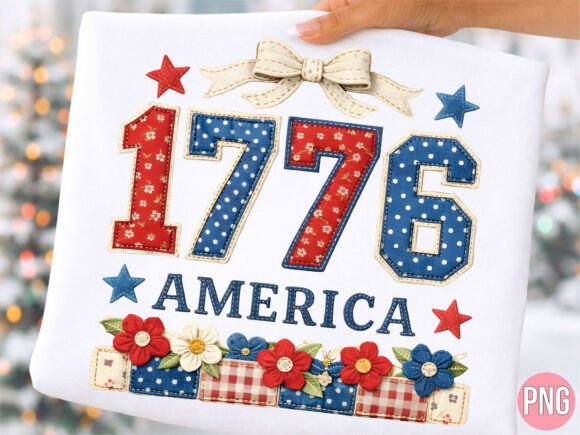
When preparing for Independence Day celebrations or launching seasonal print-on-demand products, selecting the right digital assets is a critical step in the design process. The 1776 America Patriotic 4th of July PNG represents a specific category of high-resolution digital files tailored for creators who need historical accuracy combined with modern usability. This article evaluates the utility, technical specifications, and practical applications of this file type to help you determine if it aligns with your current project requirements.
Understanding the File Format and Specifications
At its core, the 1776 America Patriotic 4th of July PNG is a raster image file designed for versatility. The term "PNG" stands for Portable Network Graphics, a format widely supported across operating systems and design software. The defining characteristic of this specific asset is its transparent background. Unlike JPEG files, which typically include a solid white or colored box around the artwork, a PNG with transparency allows the design to be layered seamlessly over any color fabric, paper, or digital backdrop without visible edges.
Technical quality is paramount for professional results. This particular design file boasts a resolution of 300 DPI (dots per inch). In the printing industry, 300 DPI is the standard benchmark for high-quality output. Files with lower resolutions, such as 72 DPI (common for web browsing), often appear pixelated or blurry when printed on physical goods. By offering 300 DPI, this file ensures that fine details—such as the texture of old parchment, the crispness of typography, or the gradients in patriotic colors—remain sharp whether the final product is a small sticker or a large wall canvas.
Upon purchase, users receive a single ZIP folder containing the PNG file. It is important to note that ZIP files are compressed archives used to reduce file size for faster downloading. Before the image can be utilized in any software, the user must unzip or extract the file. This is a standard procedure but a necessary step that some beginners may overlook, leading to confusion if they attempt to open the archive directly in an image editor.
Ideal Applications and Use Cases
The primary value of the 1776 America Patriotic 4th of July PNG lies in its adaptability for both personal DIY projects and commercial small business ventures. Because the file is ready-to-use, it eliminates the need for designers to create complex illustrations from scratch, saving significant time during peak seasonal periods.
Print on Demand and Apparel
For entrepreneurs utilizing Print on Demand (POD) services, this file is a strong fit for apparel and accessories. The transparent background makes it ideal for direct-to-garment (DTG) printing on t-shirts, hoodies, and tote bags. Whether the base garment is navy blue, heather gray, or classic white, the design integrates cleanly. Additionally, the high resolution supports sublimation printing on hard goods like mugs, tumblers, and coasters, where image clarity is essential for customer satisfaction.
Paper Crafts and Home Decor
Beyond textiles, the file serves well in the paper crafting community. Scrapbookers can incorporate the 1776 theme into memory albums documenting family celebrations. Greeting card makers can use the graphic as a central focal point for handmade Fourth of July cards. Furthermore, the design is suitable for creating temporary wall decor, pillow covers, and album covers, providing a cohesive patriotic aesthetic for home interiors during the summer season.
Benefits of Using Pre-Made High-Resolution Assets
Opting for a pre-designed 1776 America Patriotic 4th of July PNG offers several distinct advantages over creating custom artwork or using low-quality free images found online.
- Time Efficiency: Designing a historically themed graphic that balances vintage aesthetics with legible text requires skill and time. A pre-made file allows creators to focus on product listing, marketing, and assembly rather than illustration.
- Consistency: Professional designers ensure that color profiles (typically RGB for digital and screen printing, or CMYK converted appropriately) are balanced. This reduces the risk of color shifting during the printing process.
- Scalability: While PNGs are raster images, a file provided at 300 DPI is usually created at a large physical dimension. This allows the user to scale the image down significantly without losing quality, and often scale it up slightly depending on the original canvas size provided by the seller.
Considerations and Technical Limitations
While the 1776 America Patriotic 4th of July PNG is a robust tool, it is not a universal solution for every scenario. Potential buyers must evaluate their specific needs against the limitations of the file format.
Software Compatibility
Before acquiring the file, users must ensure their editing software supports PNG imports. Most modern programs, including Adobe Photoshop, Illustrator (via placement), Canva, Procreate, Cricut Design Space, and Silhouette Studio, handle PNGs effortlessly. However, very old or basic image viewers may not recognize the transparency, displaying a checkerboard pattern or a black background instead. Users working exclusively in vector-based environments should understand that importing a PNG creates a raster layer, which cannot be edited as individual vector paths.
Editing Constraints
Because this is a flattened raster image, users cannot easily separate individual elements. For example, if you wish to change the font of the "1776" text or alter the shape of a specific star within the design, you will be limited unless you possess advanced photo manipulation skills to mask and reconstruct parts of the image. If your project requires significant customization of the graphic's components, a vector file (such as SVG or EPS) might be a more appropriate alternative, provided one is available.
Resolution Limits
Although 300 DPI is excellent for standard printing, there are physical limits to how large a raster image can be printed before pixelation occurs. If your goal is to create a massive billboard or a mural spanning an entire wall, you must check the actual pixel dimensions of the file (e.g., 4000x4000 pixels) to calculate the maximum print size at 300 DPI. Enlarging the image beyond its native resolution in software will result in a loss of sharpness.
Making the Decision: Is This File Right for You?
Selecting the 1776 America Patriotic 4th of July PNG depends largely on your workflow and end goals. This file is a strong fit if you:
- Need a quick, reliable solution for seasonal products without hiring a graphic designer.
- Are using cutting machines (like Cricut or Silhouette) that accept PNGs for print-then-cut projects.
- Require a transparent background for layering over colored materials.
- Are producing items in standard sizes (apparel, mugs, standard paper sizes).
Conversely, you may want to consider alternatives if you:
- Need to extensively modify the text or individual graphical elements within the design.
- Require infinite scalability for extremely large format printing.
- Do not have software capable of extracting ZIP files or handling high-resolution raster images.
In conclusion, the 1776 America Patriotic 4th of July PNG is a practical, high-quality asset for a wide range of creative and commercial applications. By understanding the balance between the convenience of a ready-to-print file and the limitations of raster graphics, creators can make informed decisions that ensure their final products meet professional standards. Always verify your software compatibility and extraction capabilities before beginning your project to ensure a smooth workflow from download to final production.